Efficacy of mild hyperthermia in cancer therapy: balancing temperature and duration
조회 734
Objectives
Hyperthermia enhances tumor sensitivity to treatments like radiotherapy and chemotherapy, but high temperatures (42–45 °C) can damage normal tissues, especially heat-sensitive neuronal cells. This study aims to examine the effects of mild hyperthermia (39–41 °C) on glioblastoma (GBM) and non-small cell lung cancer (NSCLC) cell lines to determine its therapeutic potential while minimizing normal tissue damage.
Methods
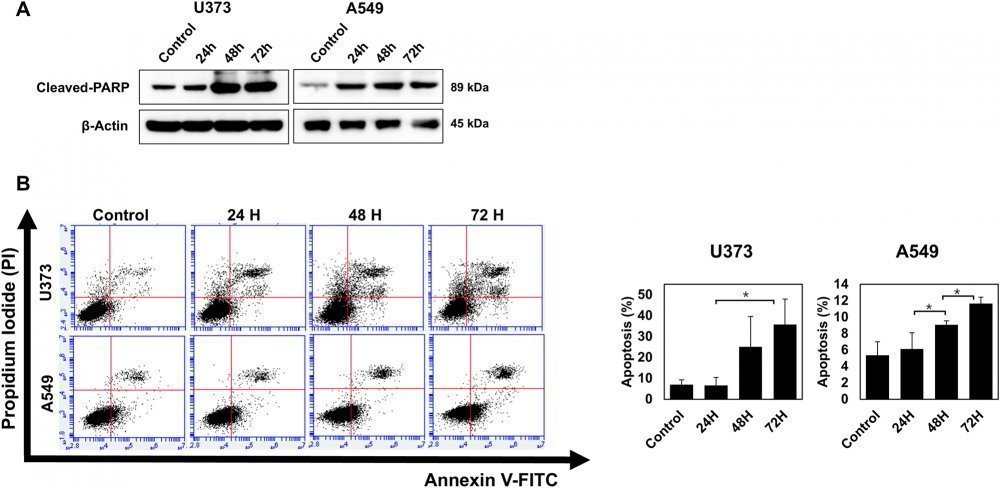
GBM (U373, A172) and NSCLC (A549, H460) cells were exposed to mild hyperthermia for up to 72 h. Cell viability was assessed using the MTT assay, while apoptosis was analyzed via annexin V staining and cleaved-PARP expression through flow cytometry and Western blotting. Clonogenic survival was evaluated to determine long-term effects.
Results
Cell viability decreased in a temperature- and time-dependent manner, with A549 cells exhibiting a ∼40 % reduction after 72 h at 40 °C. Apoptosis markers, annexin V and cleaved-PARP, showed time-dependent increases, confirming apoptotic induction (p<0.01). Clonogenic assays demonstrated significantly lower survival fractions following prolonged exposure, indicating reduced tumorigenic potential.
Conclusions
Mild hyperthermia effectively reduces cancer cell viability and induces apoptosis in GBM and NSCLC cells while minimizing potential damage to normal tissues. These findings suggest that optimizing temperature and exposure time can enhance hyperthermia’s therapeutic efficacy, making it a promising strategy for safer and more effective cancer treatment.
Yunhui Jo
Institute of Global Health Technology (IGHT), Korea University, Seoul, Republic of Korea
Jinju Heo, Myonggeun Yoon*
Department of Biomedical Engineering, Korea University, Seoul, Republic of Korea
Myonggeun Yoon
FieldCure Ltd., Seoul, Republic of Korea